A heritage in eight chapters

Wear Your
Legacy

From the first light of creation to the crusader's cross, every Posh Specter piece carries a symbol older than kingdoms. Scroll down to travel through the story behind them.

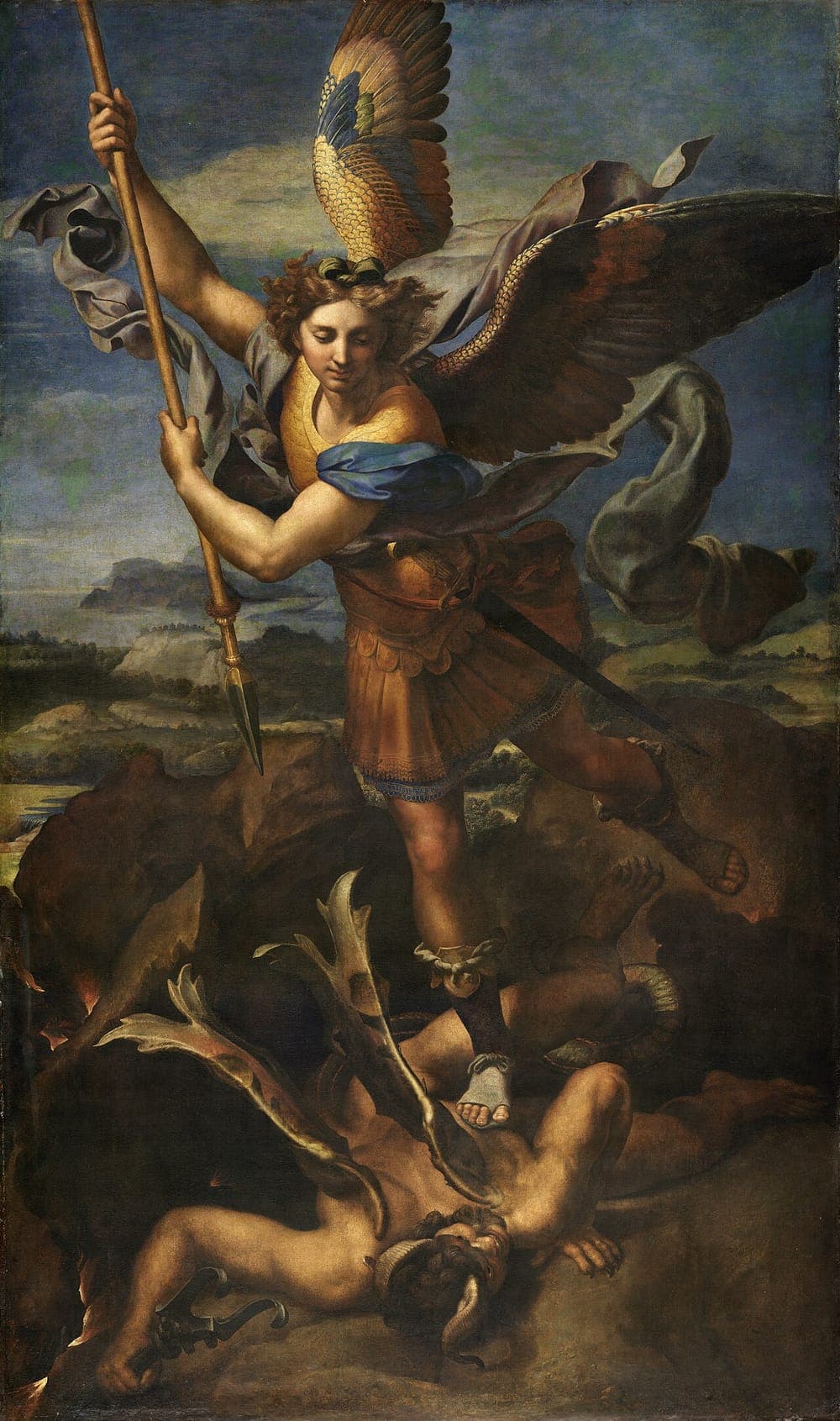
Raphael's Saint Michael Vanquishing Satan: the archangel, wings spread, drives his spear down at Satan beneath his feet

Raphael, Saint Michael Vanquishing Satan, 1518 · Musée du Louvre

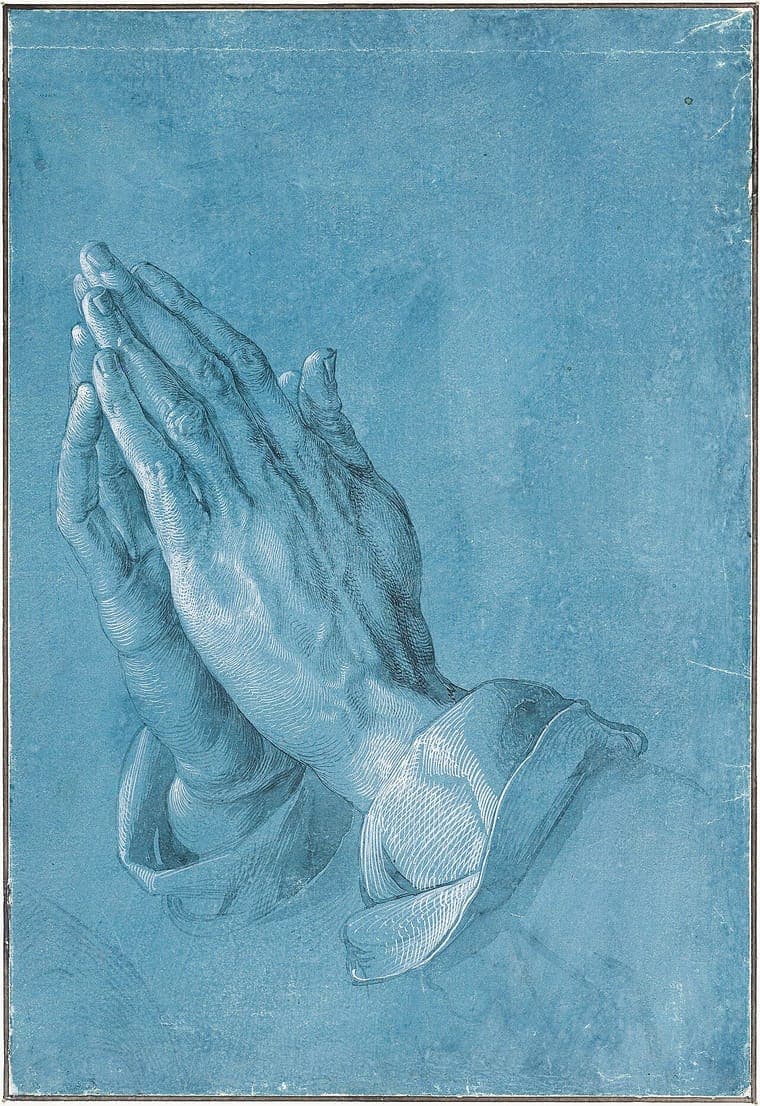
Albrecht Dürer's drawing of two hands pressed together in prayer, in white and grey on blue paper

By Albrecht Dürer

Praying Hands: drawn in 1508 as a study of an apostle's hands for the Heller Altarpiece. Five centuries on, the same gesture of prayer sits on our dad hat.

Shop the hat

The History

From Creation to the Crusader's Cross

Eight chapters behind the symbols we wear. Keep scrolling to travel through them.

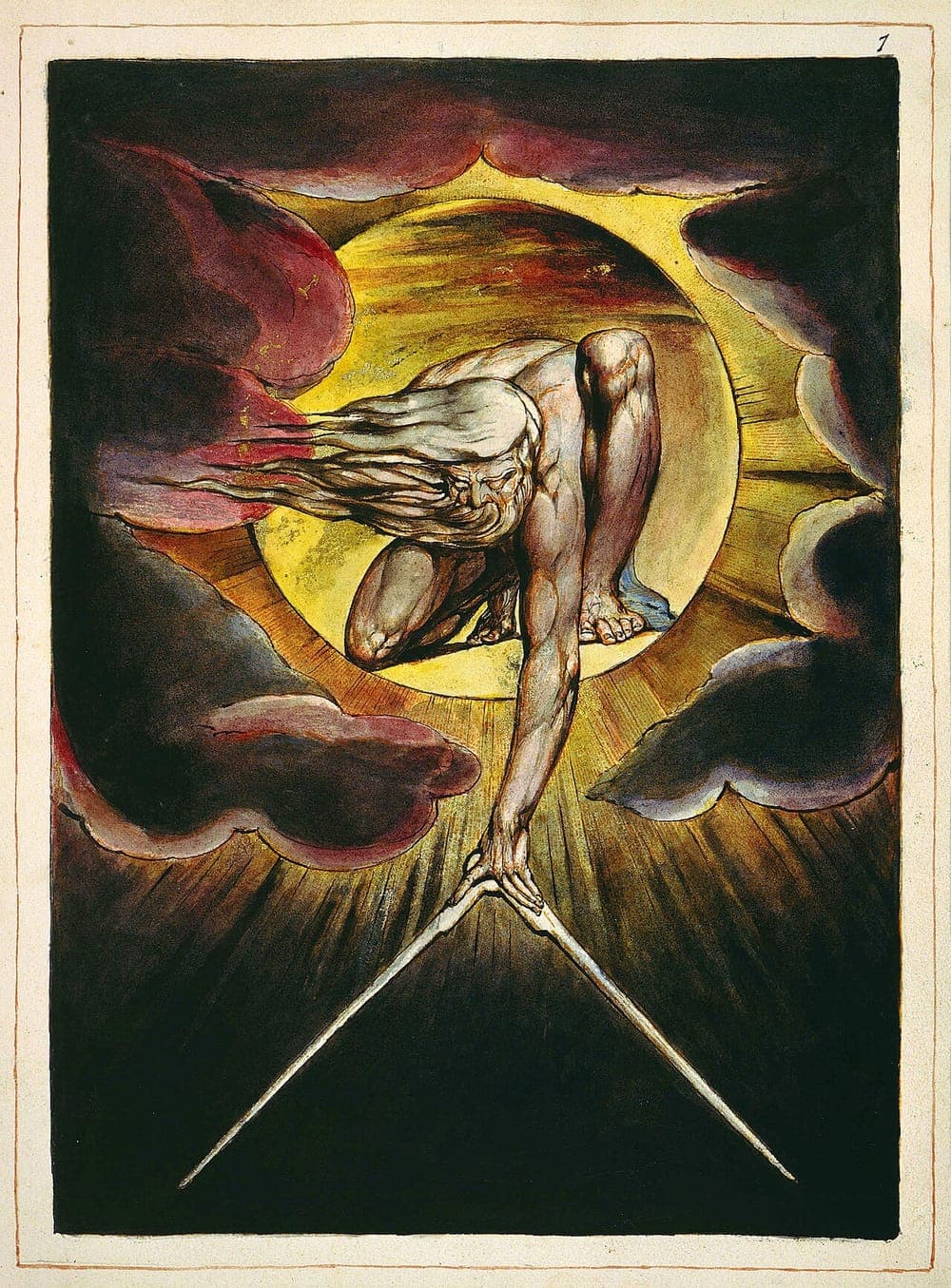
William Blake's The Ancient of Days: a bearded figure kneels in a blazing disc and reaches down with a pair of golden compasses into the darkness
William Blake, The Ancient of Days, frontispiece to Europe a Prophecy, first printed 1794

IGenesis 1

In the beginning

“In the beginning God created the heaven and the earth.”

— Genesis 1:1

Every story we carry starts here: a Creator, an ordered world, and a people made in His image.

William Blake imagined that first act as the Ancient of Days, setting a compass upon the face of the deep — an image drawn from Proverbs 8:27.
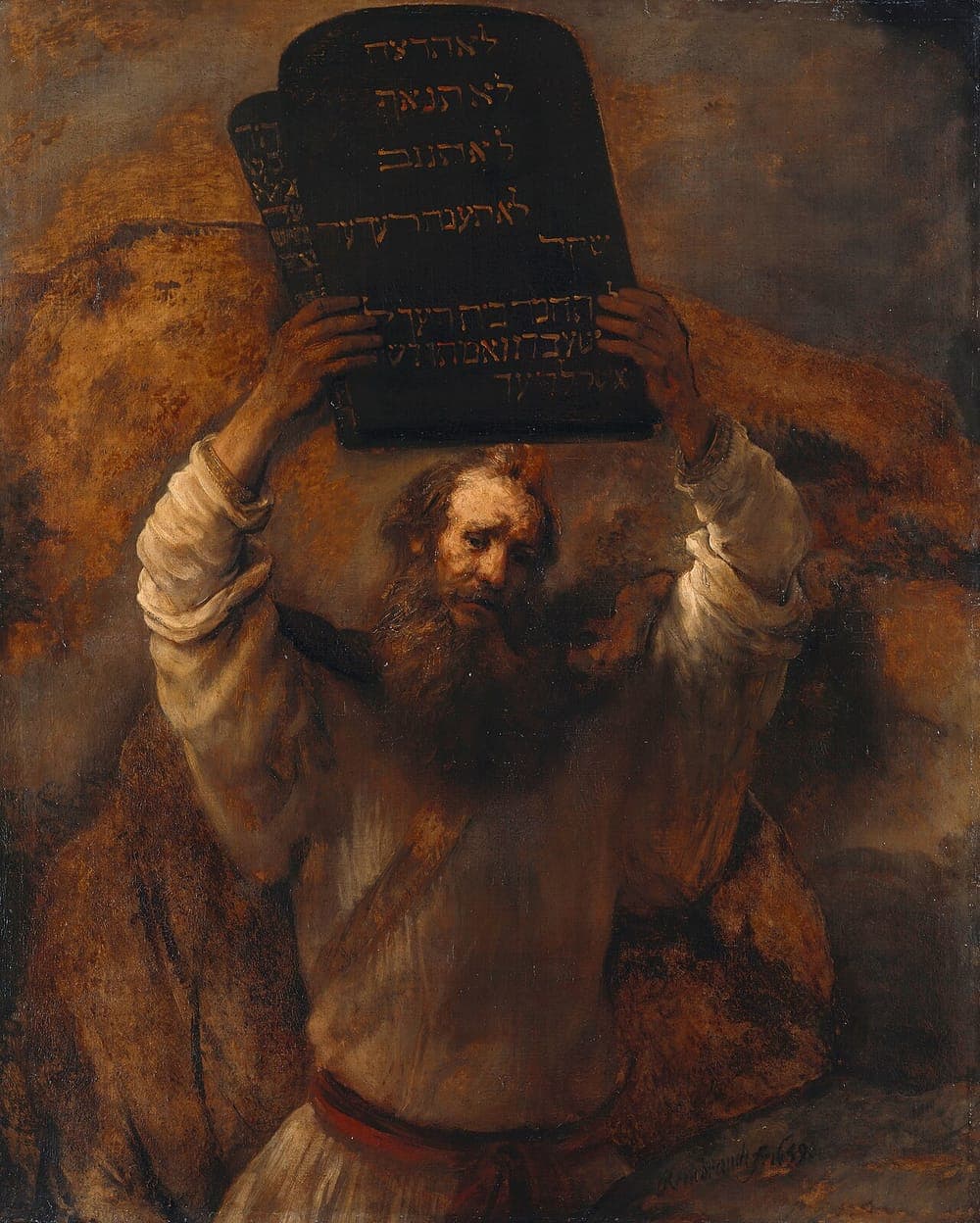
Rembrandt's Moses with the Ten Commandments: Moses raises two stone tablets inscribed in Hebrew above his head
Rembrandt, Moses with the Ten Commandments, 1659 · Gemäldegalerie, Berlin

IIGenesis 12 — Exodus 20

A people set apart

“I am the LORD thy God… Thou shalt have no other gods before me.”

— Exodus 20:2–3

God calls Abraham out of his homeland and promises that through him all the families of the earth will be blessed.

Generations later Moses leads Israel out of Egypt and receives the Law on Mount Sinai. Rembrandt painted him in 1659, lifting the tablets above his head.

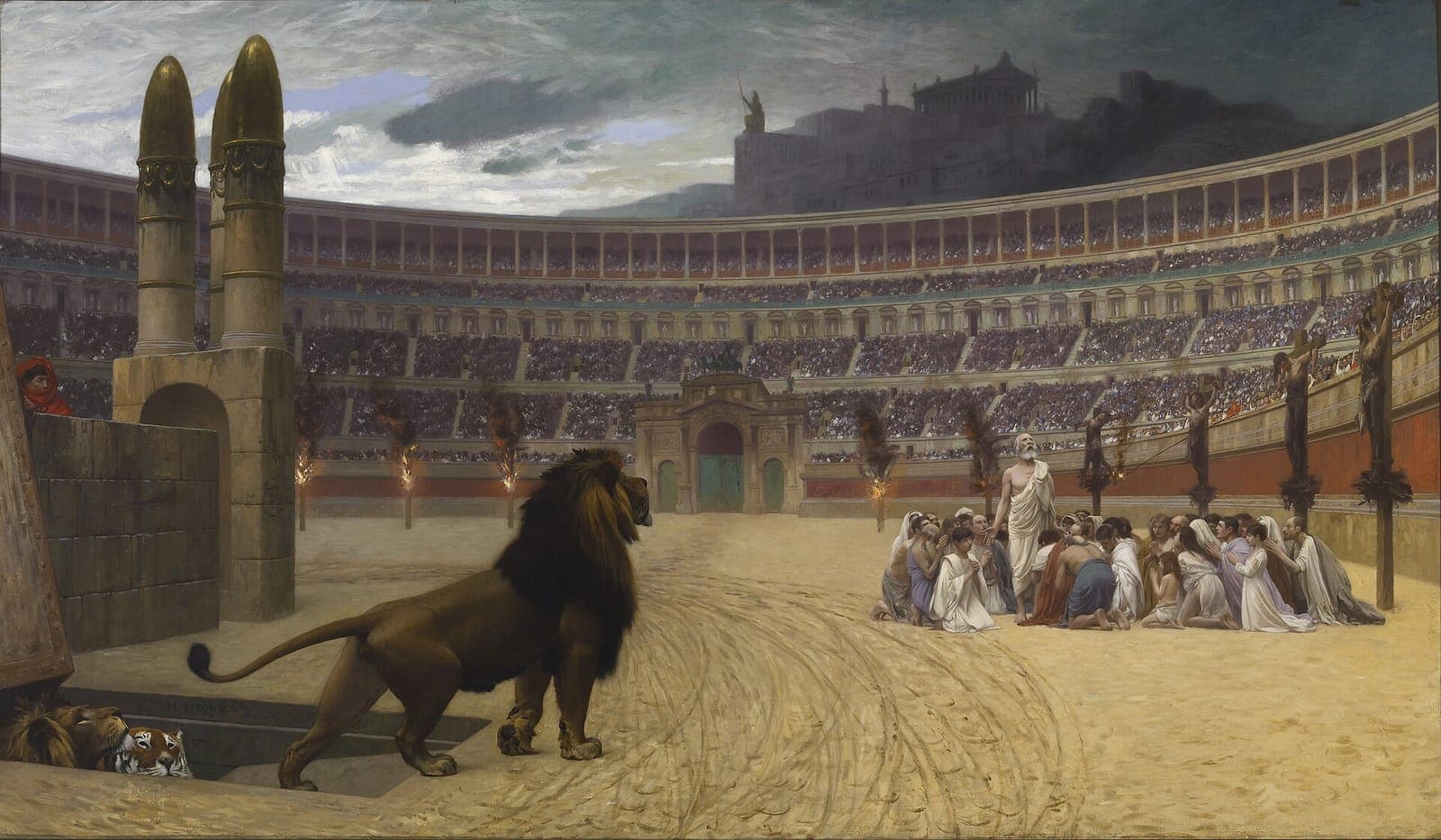
Jean-Léon Gérôme's The Christian Martyrs' Last Prayer: a group kneels in prayer in a vast Roman arena as a lion emerges from a gate
Jean-Léon Gérôme, The Christian Martyrs' Last Prayer, 1863–1883 · Walters Art Museum

III27 BC — AD 313

Under the eagle of Rome

“There went out a decree from Caesar Augustus, that all the world should be taxed.”

— Luke 2:1

Christ is born in the reign of Augustus and crucified under Pontius Pilate. From Jerusalem the faith travels the Roman roads to the capital itself.

For nearly three centuries Christians face waves of persecution. Jean-Léon Gérôme imagined believers at prayer in the arena.

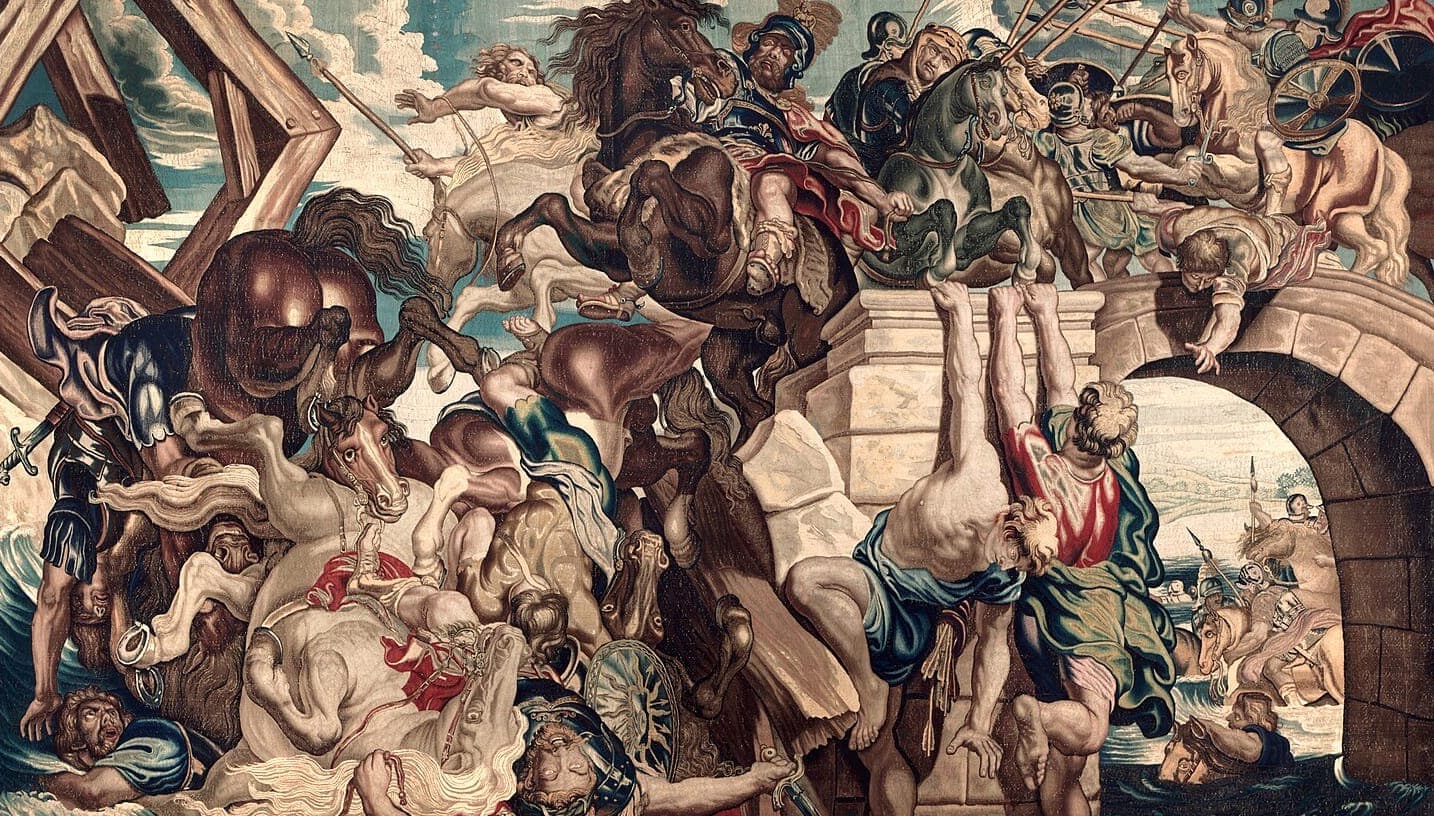
Tapestry of the Battle of the Milvian Bridge: horsemen and soldiers tumble from a stone bridge into the river
Triumph of Constantine over Maxentius at the Battle of the Milvian Bridge, tapestry designed by Peter Paul Rubens, 1622 · Philadelphia Museum of Art

IVAD 312

In this sign, conquer

“Conquer by this.”

— Eusebius, Life of Constantine, I.28

Before the Battle of the Milvian Bridge, Constantine has his soldiers mark their shields with the Chi Rho — Χ and Ρ, the first two Greek letters of Christos.

He wins, and in 313 the Edict of Milan grants Christians freedom of worship across the empire.

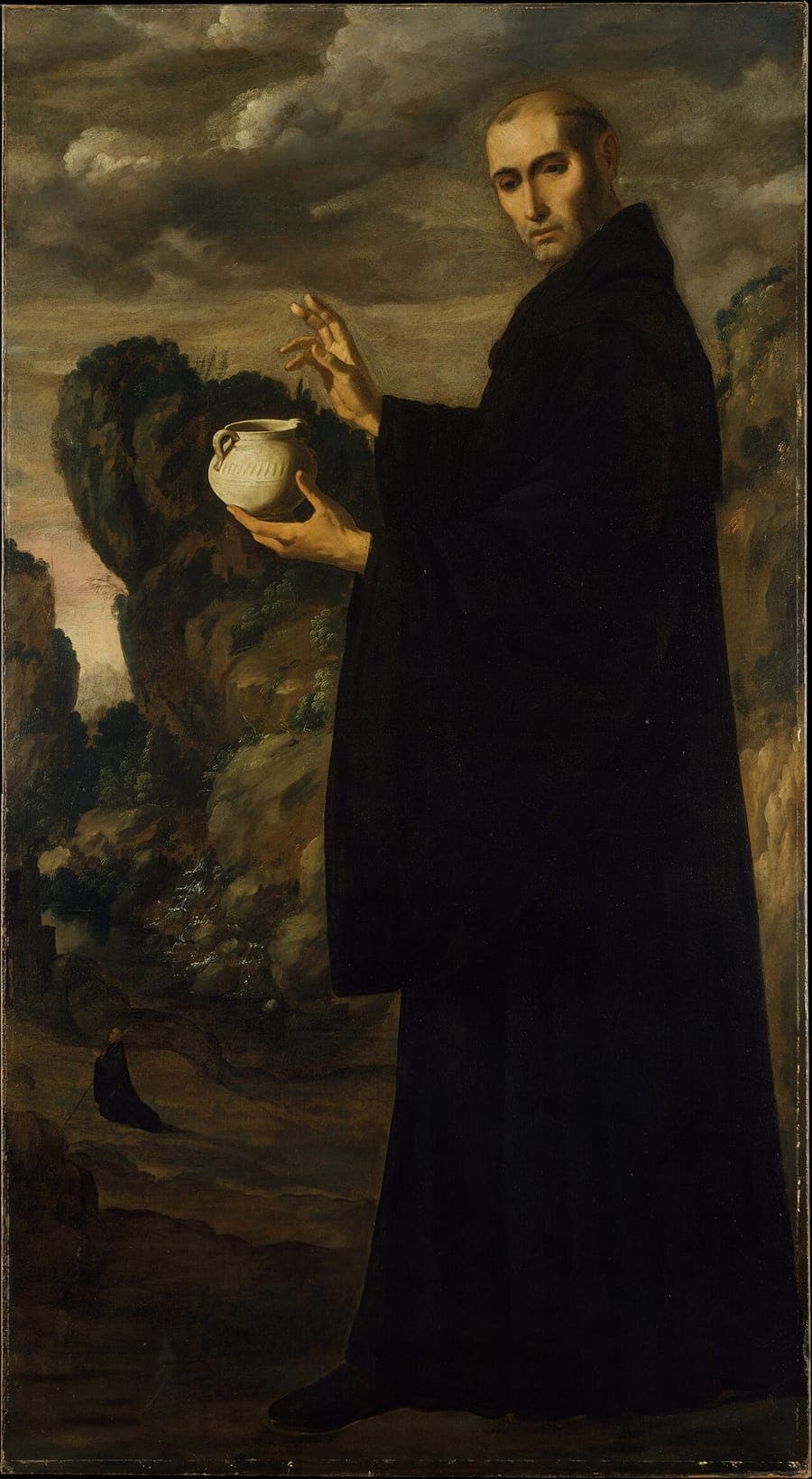
Francisco de Zurbarán's Saint Benedict: the saint in a black habit stands in a dark landscape holding a glass orb
Francisco de Zurbarán, Saint Benedict, c. 1640–45 · The Metropolitan Museum of Art

Vc. AD 480 — 547

Pray and work

“Hearken, my son, to the precepts of the master, and incline the ear of thy heart.”

— The Rule of St. Benedict, Prologue

As the western empire falls apart, Benedict of Nursia founds the monastery of Monte Cassino around 529 and writes a short Rule for monks.

Its rhythm of prayer and work, later summed up as ora et labora, shapes monastic life in Europe for centuries to come.

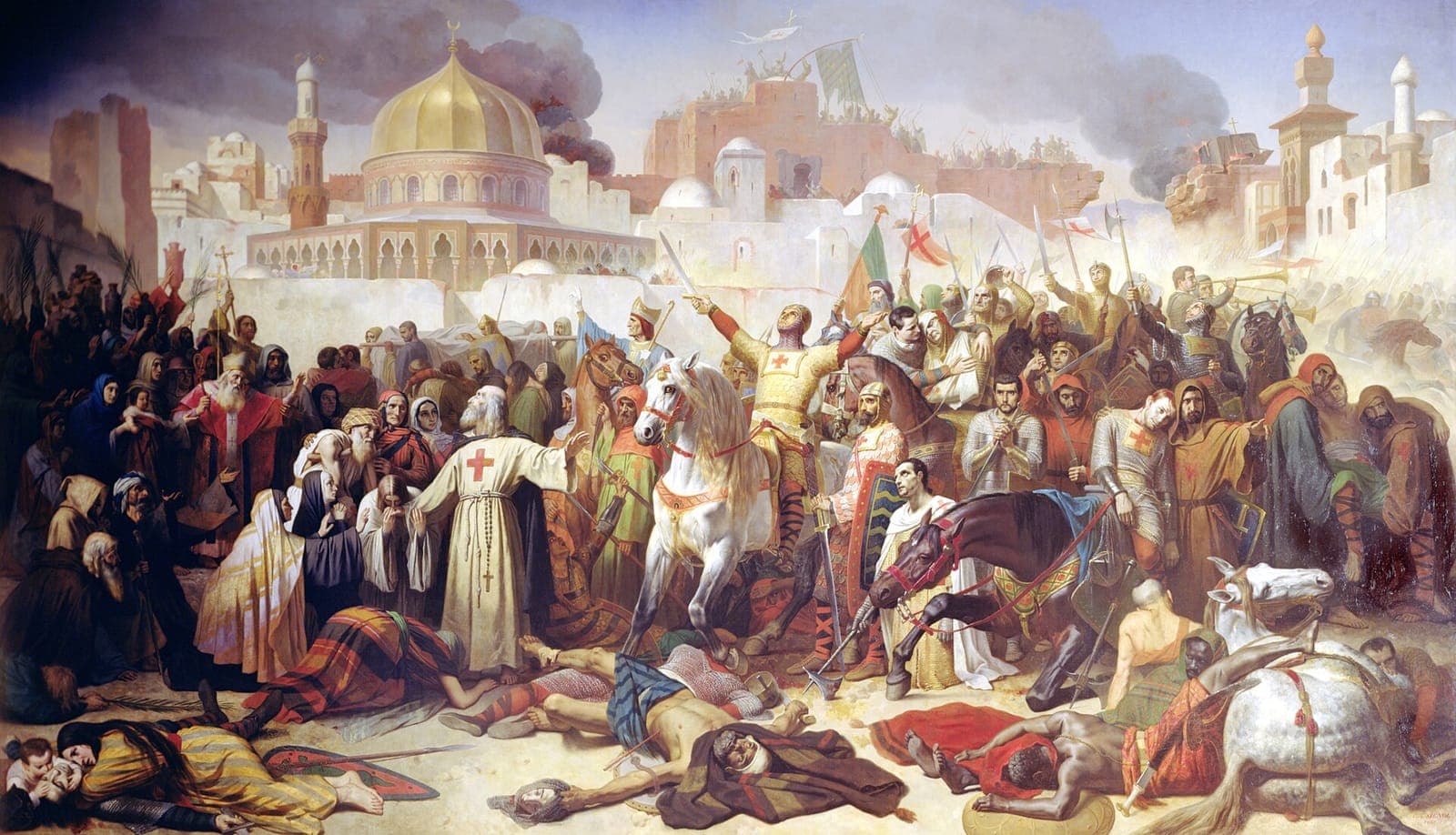
Émile Signol's The Taking of Jerusalem by the Crusaders: crusaders give thanks before the domes of the city
Émile Signol, The Taking of Jerusalem by the Crusaders, 15 July 1099, 1847 · Palace of Versailles

VIAD 1095 — 1291

Deus vult

“Deus vult! Deus vult!”

— The crowd at Clermont, as recorded by Robert the Monk

At the Council of Clermont in 1095, Pope Urban II calls the knights of Europe to aid the Christians of the East. Jerusalem falls to the crusaders on 15 July 1099.

The five-fold Jerusalem cross becomes the emblem of its kings — the cross on our crusader pieces today. Among those kings is Baldwin IV, who rules Jerusalem from 1174 to 1185, despite suffering from leprosy since childhood.

The Crusader Collection
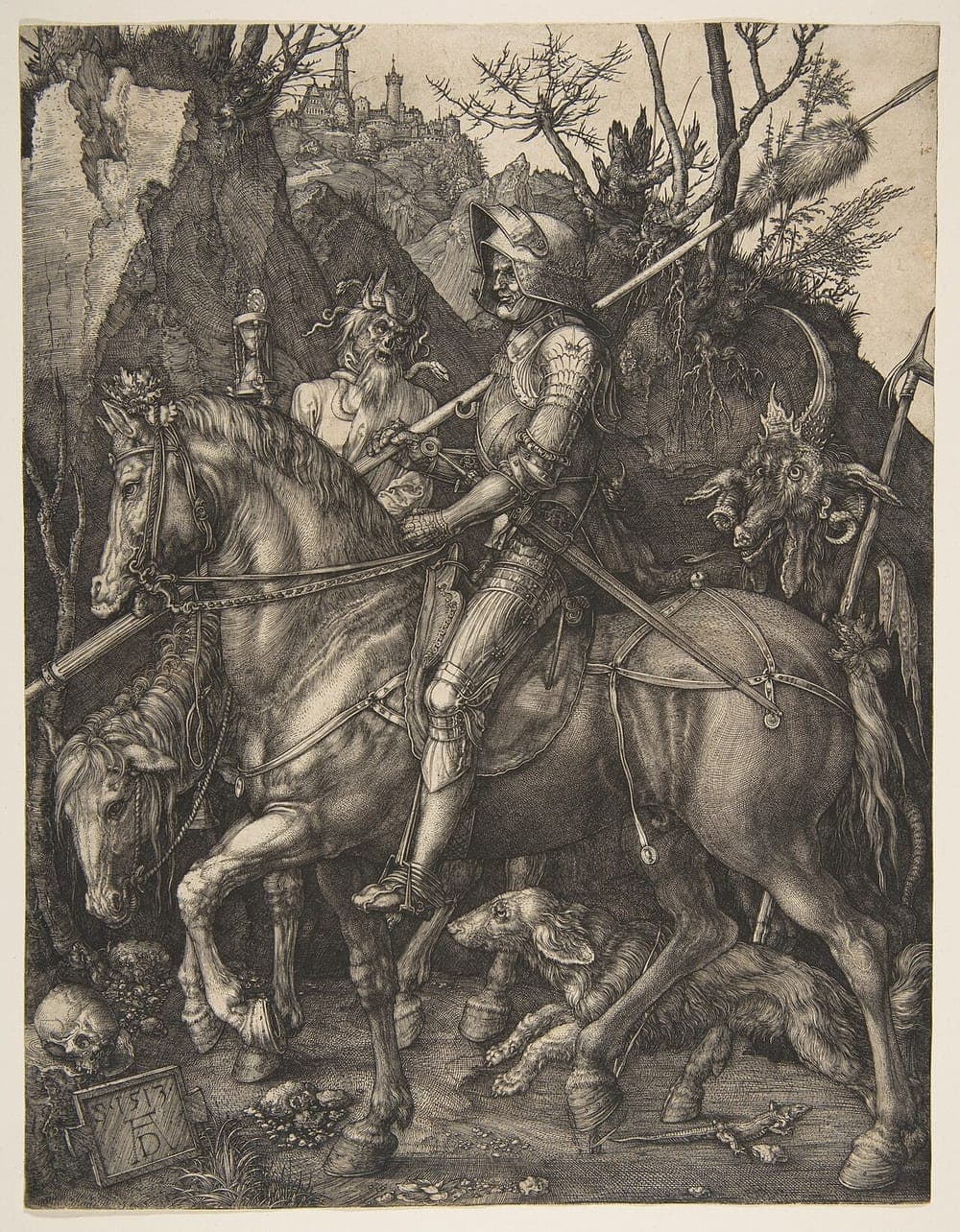
Albrecht Dürer's engraving Knight, Death and the Devil: an armoured knight on horseback rides through a dark wood past a skeletal figure of Death and a horned devil
Albrecht Dürer, Knight, Death and the Devil, 1513 · The Metropolitan Museum of Art

VIIc. 1400 — 1600

Rebirth

Artists return to Scripture and the classical world with new eyes. Around 1490 Leonardo da Vinci draws his Vitruvian Man, the human figure measured against circle and square. In 1508 Dürer draws an apostle's hands folded in prayer; in 1513 he engraves a Christian knight riding on past Death and the Devil.

In 1518 Raphael paints Saint Michael casting Satan down. These are the images we carry forward.

VIIIToday

Wear your legacy

Posh Specter carries these symbols — Saint Benedict, the Jerusalem cross, Saint Michael, the praying hands — into everyday wear.

Not as costume, but as conviction.

Shop all

The Collection

View all 15

Shop by Category

All categories